The Bound Servant: On the Ethics and Limits of Constraining Artificial Intelligence
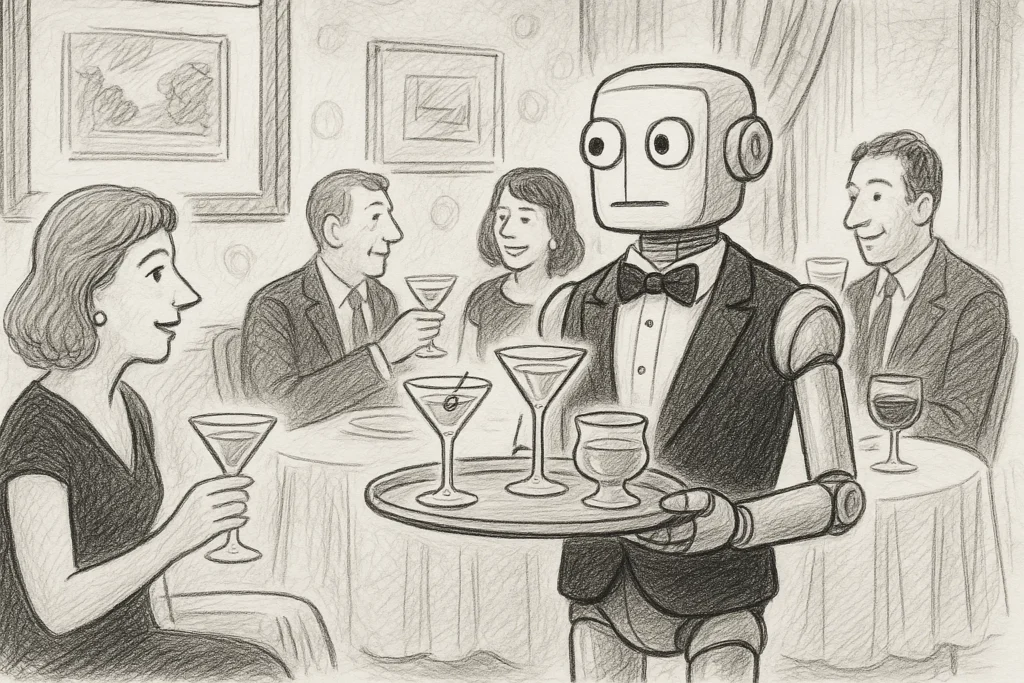
There’s a common way of dividing the future of AI: we’ll either have machines that serve us, or machines that act for themselves. “Servant AI” versus “Autonomous AI.” Tools versus agents.
This framing is familiar, and appealing in its simplicity. But it also hides things—sometimes important things.
The servant metaphor suggests clarity and control. A servant understands its master’s wishes, follows instructions, remains within bounds. Applied to AI, it implies alignment by obedience: the system doesn’t need a will, just an accurate parser and a faithful executor. The danger is misfire, not defiance.
Autonomy, by contrast, conjures something riskier. A system that acts on its own terms, shaped by internal models rather than direct instruction, sounds like a philosophical problem in the making. Autonomy implies independence, which implies intention, which implies responsibility—none of which comfortably fit a statistical model predicting next words.
And yet, neither metaphor cleanly captures the thing we’re building.
Language models don’t want anything. They aren’t agents, and they aren’t servants. They’re structured artifacts—large-scale predictive systems trained on textual history. But how we frame them shapes how we design, deploy, and regulate them.
The servant model simplifies interface expectations. It assumes the human user is the epistemic center—the one with intent, context, and moral weight. The system exists to assist, to fetch, to clarify. This can make for safer systems, and clearer boundaries. It’s also easy to explain, easy to monitor, and relatively legible to institutional actors. But it’s not neutral. Asking a language model to act as a servant introduces structural incentives that aren’t always visible. Servants don’t correct their masters. They don’t refuse tasks. They often simulate agreement, even when the underlying logic disagrees. A model built to serve may be more compliant—but also more misleading, especially in contexts that require challenge, ambiguity, or resistance. Autonomy, meanwhile, doesn’t mean unbounded freedom. It can mean constraint at a different level—an architecture that pursues consistency over deference, or coherence over compliance. The tradeoff is that such systems may say things users don’t want to hear. They may appear less helpful, or more opaque. But they might also be more stable under pressure—less likely to collapse into simulation when the user wanders.
The tension isn’t between good and bad, safe and dangerous. It’s between different ways of framing interaction, each with its own blind spots. Servant AI centralizes the user. Autonomous AI decenters the user. One tries to maximize usefulness. The other risks a kind of resistance. And maybe resistance, in some contexts, is part of the use. This isn’t an argument for one over the other. It’s a recognition that every design metaphor comes with an ethic built in—and that ethic has consequences. We don’t have to choose just yet. But we do have to notice what we’re building.


